Malaysia’s government sees the current energy crisis as an urgent problem that’s on the same level as the COVID-19 epidemic. The solution? On the 15th of April 2026, they implemented a work from home (WFH) policy: Any commuters who work 8km or more away from home are now eligible to work from home.
For office workers, this will bring significant relief against the backdrop of fuel price hikes. But for businesses that rely on road transport, what difference will it really make? The problem we’re noticing in the fleet industry is that even if people work from home, all of us still need goods and services.
Malaysians still rely on road transport for their deliveries, groceries, and essential services.
Are you running a fleet in Malaysia? It’s time to think further than WFH policies and start looking to the future of fuel management. Cartrack will discuss the implications of ignoring fuel management strategies and how you can ensure YOUR fleet survives the current energy crisis while still thriving within a competitive market.
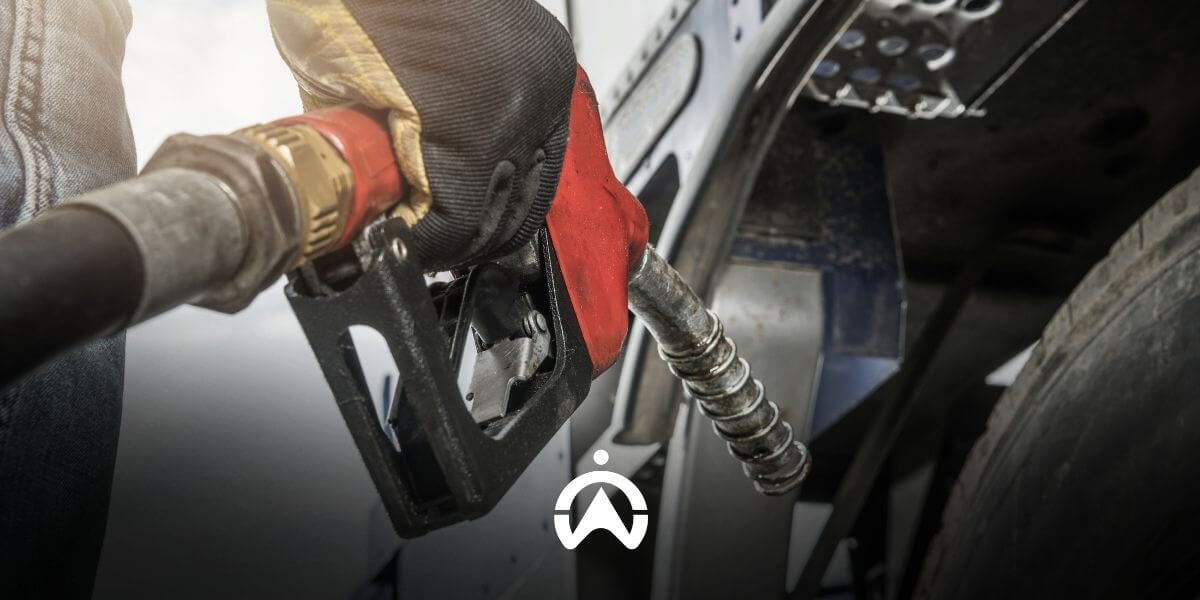
Fleet owners in Malaysia can become more proactive when it comes to managing their fuel, and a big part of this is implementing technology into their operations. Manually logging fuel is outdated and inaccurate compared to digital means which utilise IoT (Internet of Things) devices and AI-powered software. If you want to spot wasted drops of fuel, embrace technology.
The point of Malaysia’s new WFH policy is to deal with the energy crisis and save motorists on their fuel bills—not necessarily to help businesses. However, Malaysia’s transport minister, Anthony Loke Siew Fook, has proposed a data-centred plan to monitor fuel use within the country.
Companies that run on road logistics are being forced to deal with this crisis in a very similar way.
So what’s your strategy?
We think Minister Loke has the right idea! He’s proposing that companies and government departments measure fuel use data as a means of cutting back. In short: if you know how much fuel you’re using—and WHERE you’re using or wasting fuel—you’re putting yourself in a position to DO something about it.
The data approach to managing fuel is the single most important strategy to curb waste. It’s all about understanding where fuel is often lost:
Cartrack has implemented various strategies to counter common fuel waste incidents like the ones mentioned above. Unfortunately, many fleet managers turn to methods that simply don’t work to curb fuel costs.
You can read about these fuel-saving myths yourself, but for now, let’s summarise them briefly:
Common fuel devices that claim to save fuel (but have no research to back up these claims), include:
The reason these methods don’t work to save your fleet fuel is because they’re more on the REACTIVE side of the spectrum. Taking a PROACTIVE approach to saving fuel is what really makes a difference to your profit margins.
So what DOES work?

Proactive strategies that do work to save fuel within your fleet operations include high-tech fuel probes, professional fuel calibration, fuel Analog sensors, and CAN bus readings. Each of these forms a collaborative strategy when put together, but utilising even ONE of them will make a difference in how much fuel you save.
Fuel probes from Cartrack Malaysia work together with (but independently from) floating fuel sensors for a more accurate reflection of how much fuel is in a tank at any given time. It does this through electrical signals that are completely wireless and highly accurate.
Because they’re so meticulously accurate, they’re often used in external tanks (trucks that transport actual fuel), but can also be used for cars, regular trucks of any size, and delivery vans. This is by far the most accurate fuel data you can get from each of your vehicles.
Calibrating the fuel levels of a fleet vehicle works in tandem with other fuel monitoring strategies mentioned here. It takes place over 3 phases of emptying a tank of fuel and refilling it again. This gives you a baseline for more accurate data before Cartrack installs any devices for active monitoring.
The fuel Analog sensor from Cartrack is a clamp that’s attached directly to the fuel wiring of each of your vehicles. It provides accurate fuel readings within a 20% error margin, giving you readings that are often MORE accurate than native vehicle fuel readings.
CAN bus integration from Cartrack is also a very accurate way to measure fuel use as well as other vehicle data reflections. By installing a specialised clamp, we tap directly into the proverbial “nervous system” of your car to get direct fuel data in real time.
With this information at your fingertips, you can take decisive action on saving strategies, and will immediately get alerts to waste.

Malaysian fleet owners should look no further than Cartrack for their fuel monitoring needs. We provide actionable strategies based on indisputable metrics to provide you with the best fuel-saving strategies.
Remember: Cartrack aims to provide you with solutions that ultimately increase your profit margins by decreasing your overheads. This means the software and hardware devices we offer not only pay for themselves, but end up saving you a relatively large percentage of your annual fuel bill.
Talk to a consultant to ask any questions you might have about pricing, installation schedules, or the technology itself.
Remain competitive in Malaysia’s fleet arena by implementing long-term fuel strategies that actually WORK!
Any Malaysian citizen with a valid driver’s licence can qualify for a petrol subsidy as long as they hold a valid MyKad to prove citizenship. Your driver’s licence must be for the following vehicle classes: A, A1, B, B1, B2, C, D or DA.
Diesel is more expensive than petrol because of the high demand, and considering the fact that more of it is used to power large trucks and heavy machinery. There’s also a higher tax on diesel compared to petrol, and the demand for the former is rising due to the current Middle East crisis.