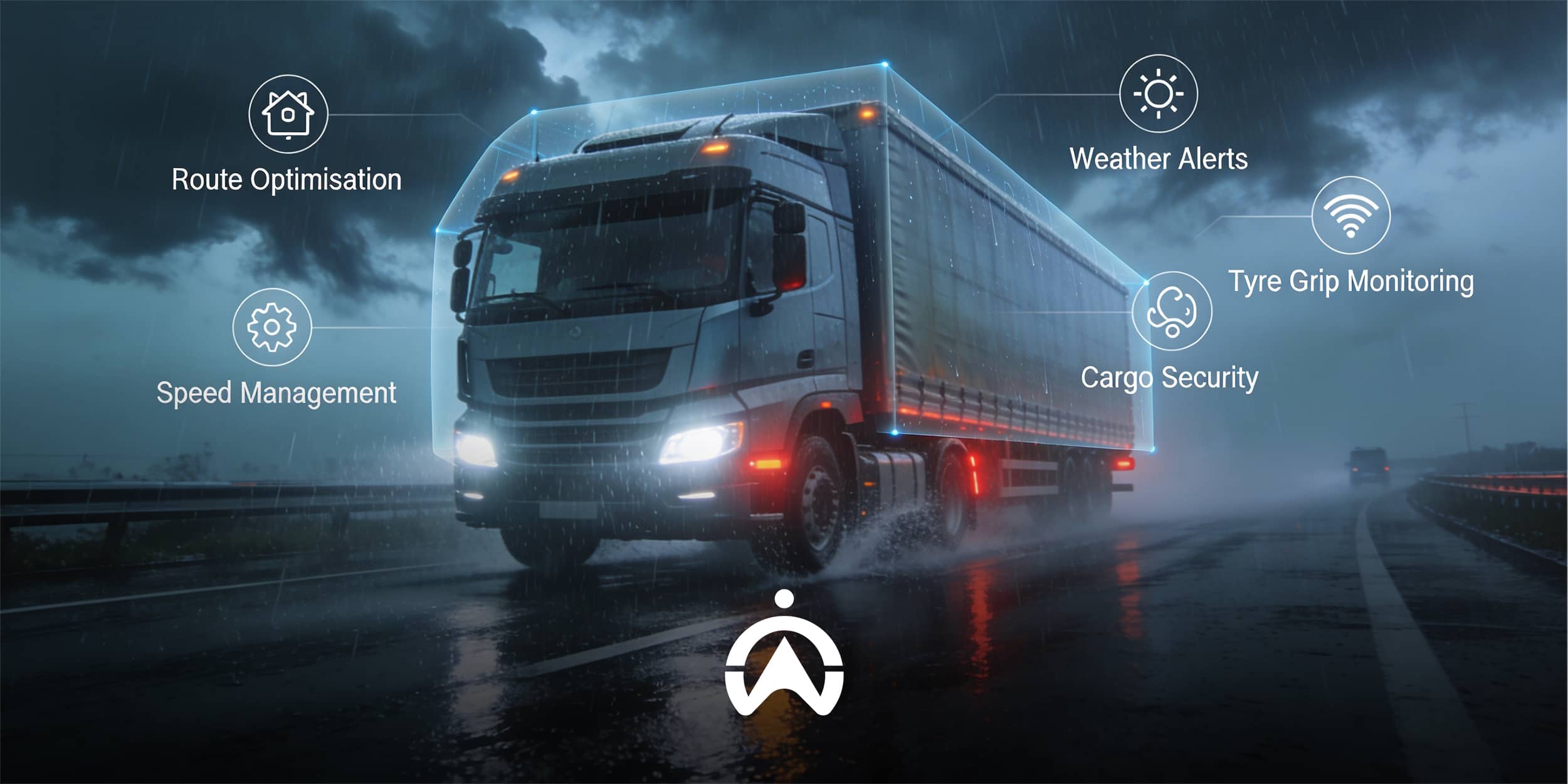
Come rain or shine, fleet operations continue. Malaysia has a tropical monsoon climate, meaning heavy rains are common yet unpredictable, especially in areas like Johor, Selangor, and Kelantan. Driving in wet weather is not only a risk for your drivers and vehicles but for the cargo they're carrying as well, and an accident in wet weather can cost fleets millions.
According to recent stats, in Malaysia there were “273,668 road traffic accidents recorded between January and April 2026”. When it’s raining, conditions on already-congested roads worsen. Visibility drops, and the ability to stop your vehicle immediately, especially if you’re carrying a heavy load, becomes impossible.
For fleets, wet weather can be stressful, dangerous and catastrophic. This is why driver behaviour monitoring, cargo monitoring, advanced route optimisation and predictive maintenance are imperative for fleets in Malaysia. An advanced telematics system from Cartrack is one of the best ways you can ensure safety in your fleet and cargo in wet weather.
Rain is more dangerous for commercial fleets for two reasons. Size and weight. If your normal light motor vehicle loses control when the weather is wet, it can cause quite a nasty accident. However, if a 16-wheeler truck carrying tonnes of cargo loses control when it’s raining, it's completely catastrophic.
When heavy rain hits and there are pools of water on the road, things can go from bad to worse very quickly. When the tyres of your trucks can’t displace water quickly enough, they’ll lose contact with the road. This is known as hydroplaning.
For a small vehicle this is a scary situation, but with the right skills a driver can gain control of the car. However, if your tyres aren’t in great condition, this makes hydroplaning even more difficult to control. And for a truck carrying a load, this is a much more dangerous situation.
Because trucks are so big and heavy, it’s already difficult for them to stop at a whim. Throw in puddles of water that make them lose traction, and the truck can easily jackknife and can cause a serious accident that won’t only put others on the road at risk but also damage your vehicle and the cargo.
Rain reduces driver visibility by a significant amount, and for trucks, blind spots become even larger thanks to the extra spray that results. If your lights, defrosters and windscreen wipers aren’t working well, your visibility will drop even more.
For a commercial truck driver, having low visibility is a major hazard. Not only for your driver, but for everyone else on the roads as well.
Fleet drivers are usually on the roads for extended periods. This can cause them to drive recklessly or experience serious fatigue on the road. When it starts raining, drivers need to be extra vigilant and focused. This can be difficult if your driver has been driving for 4+ hours.
It’s really important for your drivers to have enough breaks on their routes and also have the most efficient route planned for them. If not, an unexpected storm (together with fatigue) is a recipe for disaster.
Not only do fleet managers have to worry about their drivers and vehicles, but heavy rains can damage the cargo as well. And this doesn't just mean cargo will get damaged in an accident, but if your cargo has a leak, it can compromise the stock you're transporting too.
If there’s a leak in your trailer, it can completely damage or compromise the integrity of the goods you're transporting during heavy rain. For example, if you're transporting paper or cardboard in your fleet, water damage will render the goods unusable, and the client will NOT accept it.
When the roads are slippery, it’s easy and common for a truck that’s speeding to swerve or slip on the road. Even if this doesn’t result in an accident, if the cargo isn’t tied down properly, it’ll move around in the trailer and can result in being damaged.
Another risk with cargo being displaced is that it can shift the centre of gravity in the truck, and this can cause the truck to roll.
For fleet managers in Malaysia it's incredibly important to ensure that you and your drivers are keeping a close eye on your vehicles and trailers. Maintenance checks and upkeep are vital to keeping your fleet safe during wet weather.
Here are the components that need to be well maintained at all times.
Malaysia and Monsoons are a package deal, and if you have a fleet, you need to have Cartrack as a value add-on to that package. At Cartrack we understand that your business needs to be on the road come rain or shine, which is why we have the tools to ensure your fleet, cargo and drivers are safe!
Real-time GPS tracking and routing are essential for a fleet. If you get alerted to an area that’s been hit with a flash flood, you’re able to see exactly where your trucks are and reroute any of them that are about to go into that area.
Route optimisation also allows you to make sure drivers avoid certain areas that are prone to flooding when rain hits.
Driver behaviour is the most important factor in reducing road risks in wet weather. Telematics and AI-powered cameras work together to monitor and assist driver behaviour on the road. Telematics will alert fleet managers to speeding, harsh braking and cornering, while AI cameras can monitor driver fatigue and distraction.
Drivers will immediately be alerted when they're making a mistake on the road, and they can self-correct before it causes an accident.
You can also set up cameras inside the cargo area to keep a close eye on the cargo in transit. This way your drivers can make sure the cargo is protected at all times and stop and fix it if there’s an issue detected.
Keeping your trucks and trailers well-maintained is always important for any fleet, but for fleets in Malaysia that experience monsoons, it’s imperative. Cartrack has digital checklists you can create for your drivers to perform before they hit the road. This includes tyre pressure, tyre tread, mirrors, wipers, and brakes.
Our advanced telematics does automatic engine health checks and will alert you when something needs to be looked at or replaced before it causes a complete breakdown of the vehicle.
These tools are invaluable for a fleet that has to navigate roads during wet weather conditions. So, if you're ready to keep your fleet and cargo safe when the downpours hit, click here to get in touch for your obligation-free quote!
No, not always. A lot of standard GIT insurance providers will exclude loss or damage caused by “Acts of God” such as weather conditions. So unless you have an “all risks” cover for your cargo insurance, they’re most likely only going to cover you in the case of an accident or theft.
The general rule for a commercial truck is that they should never try to drive through standing water that’s higher than the centre of their wheels. Anything higher will risk water going into the truck's engine intake, which will instantly destroy the engine block. It’s best to either find a different route or wait for the water to go down.
Unfortunately not. Unlike festive seasons when federal road speed limits are temporarily reduced, raining doesn’t affect the speed limits. The Malaysian Road Transport Act 1987 states that drivers must always travel at a “safe speed relative to the conditions". So if you're caught speeding when there's heavy rainfall and you cause an accident, you can be charged with reckless driving.