
1,457 Road fatalities were announced in Malaysia during 2024 alone, according to New Straits Times. This shocking report highlights some facts about non-compliance in the fleet industry, especially when it comes to the importance of buckling up!
It was this announcement that prompted the “Klik Sebelum Gerak” initiative, making seatbelt use before the vehicle even began to move, a mandatory practice in Malaysia. While this is a good step on the part of the government, it’s not as easy to enforce within every fleet’s team of drivers.
But it can be once you understand how helpful AI is in this important fleet management area.
Is every driver in your fleet taking Klik Sebelum Gerak as seriously as you are? If not, you might be the one who’s held responsible. Cartrack has AI solutions to help you to support compliance before each vehicle even starts moving, so read on as we cover this important topic.
Klik Sebelum Gerak is a big step towards safer driving in Malaysia. The initiative seeks to create the habit of buckling up before vehicles leave “park” mode. While it’s a great idea in principle, real-world seatbelt compliance is more challenging because it relies on each individual driver to take it seriously.
And if you thought this rule was strict on motorists in Malaysia, it’s even more strict with fleets—especially those who manage trucks, lorries and delivery vans. So let’s look at how you can implement this into your fleet.
Implement real-world seatbelt compliance by putting non-negotiable protocols in place, educating every driver on the importance of seatbelt compliance, and using AI technology to actually make it happen. Go one step further and also keep an archive of reports that prove you’ve taken this initiative seriously, and that you’ve done everything in your power to enforce it.
Heavy vehicles like trucks and lorries have more of an impact when they’re involved in a road incident. They carry more force when travelling at high speeds, and were reported to have been involved in 825 fatal road accidents within a period of one year alone.
Think about that for a moment: On 825 occasions, heavy vehicles were involved in the deaths of 5,364 people. Could many of these deaths have been avoided?
The Malaysian Institute of Road Safety Research (MIROS) conducted a study with 237 motorists, and came to the conclusion that seatbelts effectively reduced the chances of fatality during a road accident by 50%. This isn't just about the driver, it's about the front passenger too!
Now let’s put these two statistics together. For truck and lorry drivers, seatbelt compliance is especially important. We’re not only trying to keep your drivers safe, but everyone else on the road as well.
Risk management in any fleet comes with a bunch of benefits. The Malaysian government’s implementation of Klik Sebelum Gerak shows just how serious they’re taking this; and yes, they’ll be checking to make sure your fleet is complying.
But more than satisfying Jabatan Pengangkutan Jalan (JPJ), risk management can also lower your risk profile with insurance companies. It also plays a big role in your ESG reporting, but only if you can prove your efforts on proverbial paper.
Something as small as enforcing seatbelt use in your fleet can make a big difference on both fronts.
That’s why fleets are turning to AI technology to support compliance, while automatically maintaining detailed and accurate reports of their efforts. All this can be done with modern fleet technology, because it’s designed to focus on safety.
Is it okay to ignore the government’s seatbelt mandate? The short answer is, “NO!”
2009 saw the official launch of this seatbelt compliance law, but JPJ rarely went out of their way to enforce it diligently. Klik Sebelum Gerak is simply a campaign that educates motorists and fleet operators to the fact that enforcement will now take place.
This means that motorists and truck drivers who don’t adhere to seatbelt laws will incur fines, and repeat offenders may even have their licences revoked. The days of getting a simple warning from JPJ are over!
Other consequences of non-compliance can affect your fleet directly. It can inadvertently hurt your brand reputation—especially if your drivers get into road incidents. And besides that, your fleet will also fail compliance checks from regulatory authorities.
But proving seatbelt compliance efforts is possible.
It’s one thing to implement seatbelt rules in your fleet, it’s another to prove that you’re doing it when the JP Enforcement Division comes knocking on your door. AI generated reports are also useful when you’re negotiating your insurance premiums or maintaining your risk profile.
But this shouldn’t be another task to add to your already-busy schedule. They should be automated and saved digitally; ready for presentation when you’re called upon to prove compliance.
Accurate reporting of safety compliance is now possible with fleet technology, but which one should you choose: and will it cover ALL safety aspects of your drivers?
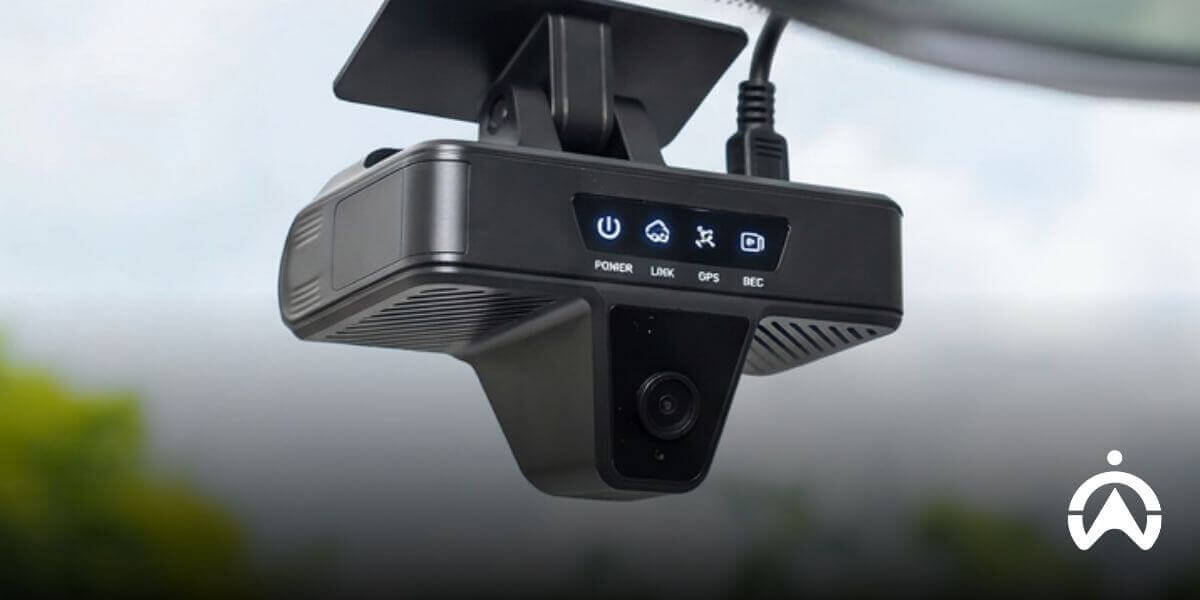
In the drive to promote safer roads through seatbelt compliance, fleets are turning to technology in the form of driver-facing dashcams. While road-facing AI dashcams are still crucial for other safety concerns, driver-facing vehicle cameras focus on what the driver is doing in real-time—and seatbelt use is no exception.
Have you considered this AI technology for your own fleet? If not, consider the following benefits and how they fit into the Klik Sebelum Gerak initiative.
At the heart of fleet safety is what your driver does before they start moving the truck or lorry to begin with. Inspections are vital to the safety that’s pre-emptively put in place once they’re actually on the road.
These pre-trip mandates aren’t just another thing to add to your list of things to do. They can be automated and even integrated into your existing pre-trip inspection protocols. So if you already have an inspection list, Cartrack’s technology can enhance it with AI to make seatbelt compliance a reality and to make it enforceable. This ultimately keeps every driver more accountable for the responsibility they hold for using a seatbelt.
Even with pre-trip mandates, there’ll always be a driver that may still forget or neglect using their seatbelt. This is where telematics come into play, because real-time updates make a huge difference to how much control you have over enforcing your newly-established seatbelt protocols.
Can you see what every driver in your fleet is doing right now? AI cameras automatically detect non-compliance with regards to using a seatbelt as well as other common safety areas, making them worth the investment if you want to create a safety culture within your organisation.
An often-overlooked aspect of safety culture is creating it everywhere within your organisation. Your warehouse staff may not be driving trucks back and forth, but they are operating heavy vehicles like forklifts and pallet jacks. These machines also have seatbelts, and these should be used before operation.
Re-establish rules within your organisation that ALL vehicles and machinery come with one simple rule: Click Before You Move!
Make sure all your staff are leading by example regardless of the vehicle they’re operating.
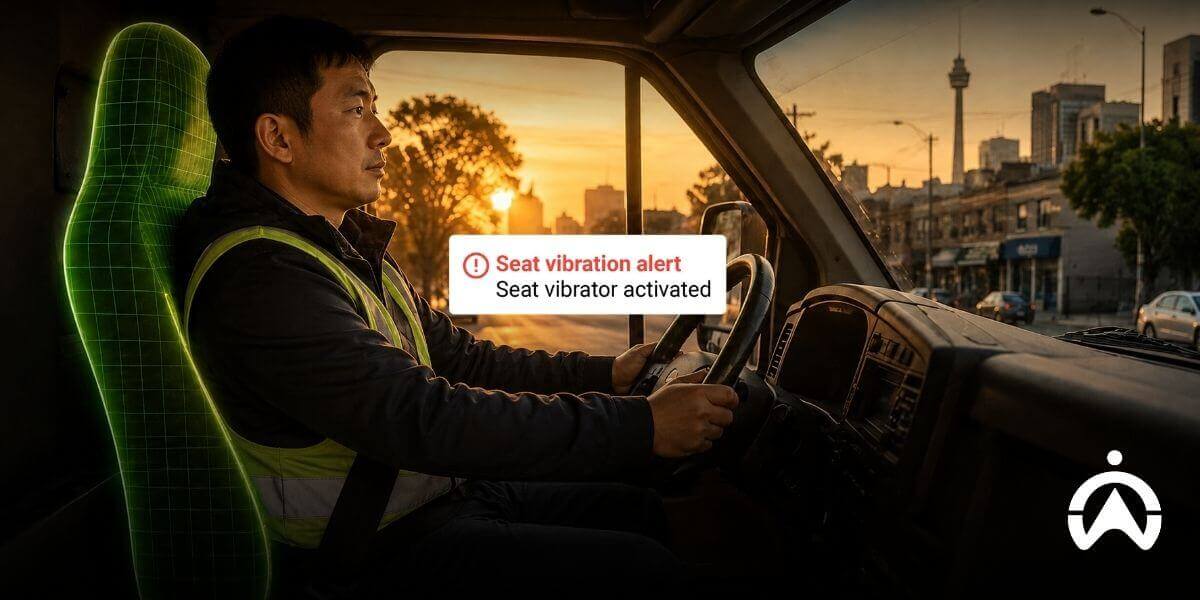
Trying to implement seatbelt compliance without the help of AI leaves more on your to-do list. But when you upgrade to Cartrack’s AI Multi Vision package, your fleet becomes instantly more compliant with Malaysia’s stricter enforcement of seatbelt use.
Real-world safety compliance is only achievable if you as a fleet operator have total visibility of your entire fleet. It sounds like a difficult goal to reach, but it’s easier with Cartrack’s single platform which offers maximum visibility all in one place. And with AI, problems are highlighted before you even start looking for them.
As important as seatbelt compliance is, there are other common causes of truck and lorry accidents. Our artificial intelligence solves these problems too!
All of the following are also included in our detection system:
Cartrack is dedicated to helping you reach your seatbelt compliance goals. Our consultants are standing by to discuss a tailored package that suits the needs of your unique fleet. And don’t forget: our software is an open API, so we can easily integrate it with any of the systems you already have in place.
Keep up with Klik Sebelum Gerak and simultaneously improve the operational safety of your fleet—and enjoy all the benefits that come with running a company that puts human lives first.
Flexi-camera configuration describes vehicle cameras that are adaptable with all kinds of heavy vehicles. They can be installed in such a way to give you and your driver a high level of visibility. If your heavy vehicles have unique areas that you want to cover, we’ll make sure you get the footage you need.
External vehicle cameras must be rugged to withstand harsh weather, which is why choosing the right provider is so important. Your cameras should also be installed by a professional so that they can handle bumps, strong winds, and tampering. Cartrack’s cameras offer all of these rugged features.
While your vehicle cameras do use the vehicle battery to maintain power, having multiple cameras on one vehicle will have a negligible effect on your battery. These cameras are designed to run on minimal power so battery health isn’t a concern.

