Drivers are the foundation of every fleet operation, and they’re the ones who keep fleets running. But the second an incident happens on the road, blame is usually placed on them first, and the conversation focuses on what the driver did wrong and not what the business could have done better to prevent it from happening in the first place.
What businesses need to understand is that fleet safety technology works best when it’s used to protect drivers, not punish them.
In Malaysia, road safety is an increasingly serious workplace safety concern. And businesses that operate fleets need to make sure their drivers stay protected while on the road. This blog will explore exactly how businesses can prevent fleet accidents with driver coaching technology and how these two elements work hand-in-hand to reduce risk.
The best way to prevent fleet accidents is to combine driver coaching with technology to flag a risk before it becomes a collision. Remember that fleet safety and driver protection are two sides of the same coin; without one, you won’t have the other.
The best way to achieve this is by:
All these points work in unison to create a comprehensive accident-prevention strategy for your fleet that keeps your vehicles, cargo and drivers safe and protected.
When we think of a workplace injury, most of us imagine an accident occurring on the work premises. However, for a business with their fleet on the road, the unpredictable roads are also a work environment. And accidents are often deadly, not only to the drivers in the fleet but to other commuters as well.
In Malaysia, road use represents one of the largest hazards for the workforce. According to occupational health data from the Social Security Organisation (SOCSO/PERKESO) referenced in the Malaysia Road Safety Plan 2022–2030, 705 insured workers died in 2019 from commuting crashes, compared to 254 fatalities in fixed workplace settings. While Malaysia records over 6,000 total road fatalities annually across all citizen demographics, these SOCSO statistics demonstrate that for commercial employees, the road is nearly three times as dangerous as the physical workplace itself.
Locally, commercial transportation remains a significant focus for road safety authorities. According to the Department of Occupational Safety and Health (DOSH) and Royal Malaysia Police (PDRM) traffic data, heavy vehicles and commercial transport fleets account for over 150 to 250 fatal road crashes annually across Malaysian highways. These statistics highlight the critical need for proactive risk management among fleet-dependent operators.
For businesses that are fleet dependent, these statistics prove that taking steps to prevent fleet accidents is necessary. It can no longer be a secondary concern that’s thought about after they happen.
The drivers in your fleet are the ones that work hard to ensure deliveries are done on time and that your customers receive their goods in perfect condition. They do all that while having to navigate strenuous road conditions for long hours. The moment an accident happens on the road, blame is almost instantly placed on the driver.
And it’s a normal instinct to find fault and place blame; however, this doesn’t help in preventing future accidents from happening. All blame placing does is make your drivers less willing to come forward when a near-miss happens, if they’re fatigued, or have a problem with their vehicle, out of fear that they’ll be blamed again.
So what does work?
Installing driver coaching technology in your fleet is the best approach to preventing an accident on the road. This tech isn’t meant to be a surveillance tool to catch your drivers out; it’s meant to help fleet managers and owners build a safer fleet.
The data provided from the technology will show you patterns like:
These specific insights allow you as the fleet manager to know exactly what hazard is happening, when it happens and which driver is responsible. Now the tough part comes in. You need to use these insights to not only coach your driver on having better driving habits but also to see what you can do to help your drivers minimise their accident risks.
This then shifts the conversation from “this is what you did wrong” to “here’s what we noticed; this is what we’re going to do to help."
Once you’ve made all the changes you can to ensure your drivers shouldn’t be making risky moves on the road, you can effectively coach them to make safer choices while driving.
Driver coaching technology should pick up signs of fatigue, encourage safe driving habits, and provide immediate alerts, all in real time. AI-powered camera systems, smart vehicle telematics, and driver behaviour monitoring all work together to prevent accidents from happening.
Vehicle telematics systems are designed to give businesses real-time visibility into how each of their vehicles are performing and how they're being driven. A smart telematics system should provide you with insights into:
This telematics data gives you actual visibility into what’s happening with your fleet. Additionally, it allows you to build a comprehensive training programme for your drivers and proactively coach them on their driving habits.
AI-powered cameras provide a layer of protection that can effectively prevent an accident from happening. It picks up when the driver is:
These signs are picked up, and the driver and fleet manager instantly receive an alert. This in-cabin alert allows the driver to correct their behaviour immediately, which in all likelihood prevents an accident from happening.
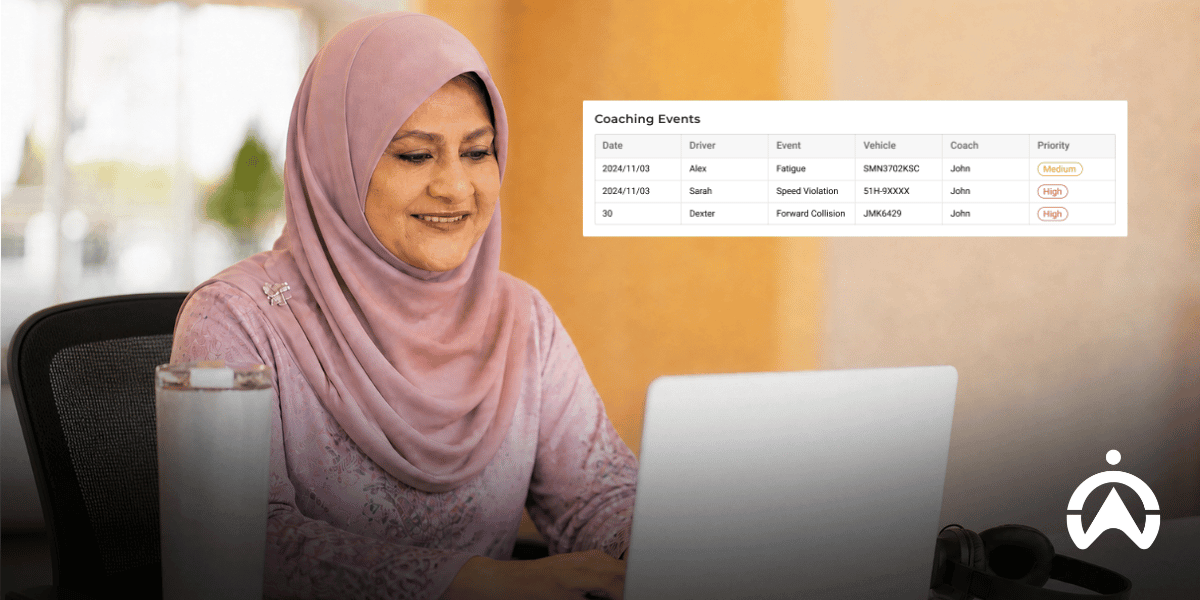
The point of this technology is that it automatically assists with driver coaching. Driver data captured on the telematics device is placed on a driver scorecard that a fleet manager can set ratings for depending on what behaviour was picked up.
This works as motivation for drivers to practise better habits on the road and is used to actively coach drivers on their problem areas.
Without the technology to assist fleet managers, driver training happens based on vague assumptions for all your drivers, regardless of whether they're making dangerous choices on the road. This type of training doesn’t have much of an impact on your drivers and also does nothing to actually prevent an accident from happening.
When your telematics devices and AI cameras provide you with real-time data, you’re able to coach each driver individually on their specific problem areas. The data allows you to have a constructive conversation, coach your drivers individually and help you to see what improvements you can make to assist them.
Driving long distances, sitting in traffic and working long hours is a recipe for fatigue and distraction for drivers. These two factors are the most dangerous as well as being the most preventable contributor to fleet accidents.
Driver coaching technology is able to pick up signs of fatigue and distraction in the cabin and immediately alert them to their actions. By catching these signs early on, you can prevent them from turning into a major accident.
When you build a fleet that focuses on driver-first safety culture, it benefits the company as a whole. When your drivers feel supported and protected, they're less likely to feel stressed on the road. Telematics systems ensure that fatigue is detected, routes are better and vehicles are well maintained, so accidents are less likely to occur.
On top of that, because your business is built to support your drivers, they’ll feel more valued and will represent your company better on the road and to the clients they see when making deliveries.
As a fleet owner, you’ll ensure every step is taken to prevent accidents from happening and reduce your insurance and repair fees. Because your employees feel supported and cared for, they're less likely to leave, so you’ll also improve driver retention. And with road safety being recognised as a workplace safety issue in Malaysia, a proactive approach also strengthens a business’ overall compliance position.
There are three steps fleet managers can use when starting to use driver coaching technology to prevent accidents. This includes assessing your fleet risks, choosing the right technology and sharing the responsibility. Let’s take a look at these steps so you can ensure that your fleet and your drivers are protected from accidents.
Before you jump in and make any changes, you need to paint a clear picture of where the risks actually are in your business. This means taking a detailed look at driver behaviour, vehicle condition, common routes, and shift patterns. Also look at recent incident reports, near misses, and driver feedback.
By doing this you can accurately identify where fatigue, distraction, or vehicle issues are, which are most likely to lead to an accident.
Do research on the technology you choose for your fleet. Not all tech is created with driver coaching in mind. Ensure that the one you use has early detection and constructive feedback, like Cartrack’s telematics and AI Vision devices.
The best way to prevent accidents in your fleet is by fleet managers and fleet drivers sharing the responsibility of preventing them from happening. Fleet managers should ensure that the right technology is installed, drivers are receiving proactive coaching, vehicles are in good condition and drivers are supported.
Fleet drivers need to take care while driving, ensure that they're well rested, and perform pre- and post-delivery vehicle checks. By working together you’ll build the kind of trust that makes coaching culture stick and accidents avoidable.
With road accidents being the leading cause of work-related deaths for fleets in Malaysia, taking the steps to prevent a fleet accident can no longer be a few ticks off your compliance checklist. Catching a risk before it becomes a collision is imperative.
This proactive safety approach is delivering results across Southeast Asia. For example, TSH Gas Pte Ltd is a one-stop LPG solution provider in Singapore. Their fleet travels through dense residential routes and must uphold high safety standards while transporting gas.
Their main challenges were that they:
The solution: They installed Cartrack’s fleet management system with integrated vision technology and performance scorecards across their entire fleet.
Our solution helped TSH Gas Pte Ltd in the following ways:
If you want to invest in driver coaching technology that truly works, pick Cartrack as your fleet safety provider!
Fleet safety beyond just following traffic laws is when a company builds and prioritises driver and fleet protection. It’s a proactive approach that requires continuous training and upgrading to ensure that every aspect of your fleet is operating in a safe manner.
Traditional driver monitoring will simply record an incident after it occurs. Driver coaching technology alerts drivers and fleet managers of risks immediately so accidents can be avoided in the first place. It also provides comprehensive insights so that the fleet manager and driver can see exactly what changes need to be made to have a safer experience on the road.
The 5 Cs of safe driving are: